Loyal reader, you may know that I am French. That my economic-migrant parents arrived (with me and my lil sis) from France half a century ago, when I was 2, because they wanted to and because they could. Worse, my foreign children are half frog, half Aussie. But we’re all citizens of the UK although only one of us swore allegiance to the late Queen, having sat the Life in the UK citizenship test. This leaves me with a very real dilemma every four years: which team to support in the World Cup.
I had a happy childhood, but growing up French in London had its issues.
When I started (English) school speaking only French, I struggled with the gobbledegook spouting from the mouths of my new companions. I have only vague recollections of this confusing period, but as I (unreliably) recall, one fine day after a period of enforced silence, I got the hang of it, started talking, haven’t stopped since!
Some years later, I realised that while I could now speak, read and write like a Brit, my native tongue (which I could speak and read) was a bugger to spell. And the extra grammar lessons that I endured (for which I am now very grateful!) were decidedly difficult and dull. Turns out that é, és, ées, ez, er, ais, aient, et, est… all make the same sound. Unless you understand the grammar, you cannot hope to know which letter combo to use.
Catholicism was a big part of growing up French and as such, I was sent to Catholic schools. My first “Forgive me Father for I have sinned” was duly uttered at 7 years old, closely followed by my First Holy Communion with the frilly white dress. Guilt and shame and traditional values ensued, and with it the expectation of early marriage and a brace of kids.
Still, being a French frog in an English school in an age when everyone had to learn my language had its upside. Though not particularly popular, I wasn’t bullied because I could guarantee you a good grade for your French homework (not too good or it’d be suspicious) if asked nicely. Or I could make your offering considerably worse if I wanted.
But no matter how fluent I was in both languages, I was always the French Frog or the Rosbif, the foreigner. Our cousins would do their best to catch us up on the latest slang but we were never quite on-trend. Look, it was no biggie, mostly because it was mild teasing at worst, also because it was kinda true. And sometimes it’s nice to be a bit different although back then I just wanted to blend in, be average, be invisible.
Obviously growing up French meant developing an unfussy palate. Look, in the past, due to wars involving long sieges, French people have been hungry. Thus we think snails are food. They aren’t. Plus we are bon vivants, so we really care about good food. Only the French could make snails palatable so that, you know, if you are reduced to eating them, it’s not all bad! But having your Rosbif friends for dinner when your French mother has cooked an ‘exotic’ meal wasn’t always a recipe for success.
There was a strict no-pets policy in our household. Ostensibly because we were going ‘back home’ 4 times per year, and who would look after these domesticated creatures? While this is a very real consideration, and organising pet boarding school would have been a constant logistical nightmare, I have a sneaky feeling that it was a cast-iron excuse for not being saddled with unwanted pets despite constant badgering from your unintentionally-dishonest I-promise-to-look-after-it kids.
Greeting people when you are French is straightforward. There is no awkwardness, wondering whether one should offer a hand or go in for a hug, or maybe an air kiss… Nope, a French person goes for la bise, both cheeks. Job done.
As you start dating, new issues arise. Your other half, let’s face it, is probably British. At first, there’s no problem. Until they come to France with you. Huh, you ask, what’s the big deal? They’ve been to France before, right? They loved it, right? Yup, but they went as Brits, and now they’re going native. As your family’s guest, they cannot choose the burger from the menu. They discover long and languid lunches, cheese like they’ve never smelled it before, served before dessert, and of course, no-one speaks English. You thought this was normal, until you suddenly saw it through their wide eyes… and you gain new respect for those who do live interpreting in the UN, because now that’s what you’re trying to do for your hapless other half who’s schoolboy French is desperately inadequate.
If, like me, you end up marrying an Australian who doesn’t even have schoolboy French, you may well fall for their I-promise-to-learn rhetoric. They will not, and it quickly transpires that this is your fault. You are a terrible teacher. I mean, sure you’ve single-handedly taught your three kids, but that doesn’t count.
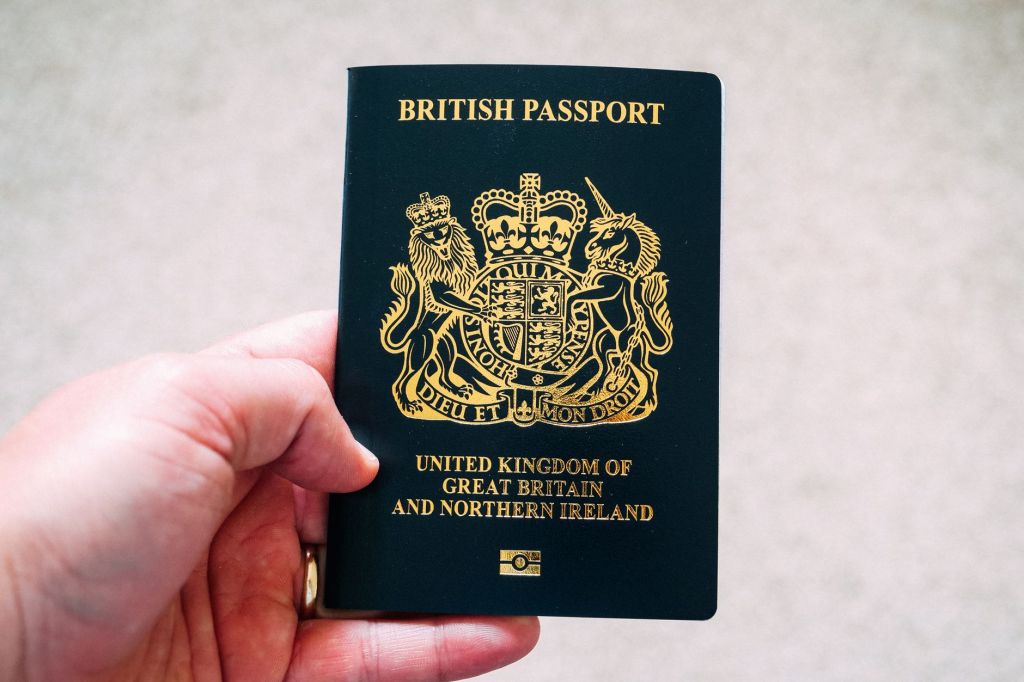
Having kids with your Aussie husband brings a new set of challenges. Your little angels aren’t British, so your first parental task is to open negotiations with the French Consulate to obtain citizenship and then a passport. Which is fine, once you’ve worked out how to obtain an elusive appointment. Not the easiest thing for a sleep deprived new mother, for whom navigating the crazy bureaucracy whilst in possession of an unputdownable infant is a recognised form of torture. Only to be informed that the double-barrelled surname you have chosen for your child will not be accepted without your husband’s written approval. In time you will jump through hoops to get everyone British Citizenship. Your reward? You have won the task of ensuring the whole family’s passports are in date at any given time (thanks Brexit). And the joy of engaging with whichever bureaucracy to renew in good time.
Because your children have a French grandmother who sleep trained her kids, presumably having been taught how by her own French mother, you do benefit greatly from inheriting this knowledge. It turns out that French babies do sleep through the night earlier than British ones because they are firmly trained to do so. And babies are actually fast learners! Without a co-sleeping/no-sleeping baby, you can get on with the procreation of your next little cherub as per your contraception-averse religion!
You discover that French babies may well have picky eating tendencies but you learn to train the sh!t out of that fussy behaviour. You’re going to have to take that child home as a proper native, and her/his whims will not be catered for. S/he’s gonna need to learn ASAP that pretty much anything is food.
You want your French kid to speak the lingo, but you’ve seen what happens to the acquisition of a second language when both parents aren’t firmly on board. Basically, the child will learn the mother tongue only to (rather rationally) replace it with English as soon as this much easier language is introduced. Any three year old will instinctively appreciate the lack of gender, the joy of not having a groupe nominale, and the relative ease of conjugation. Said second-generation 3 year old also intuits (rightly) that everyone speaks English.
In order to pre-empt this predictable tendency, you send your kids to the Lycée. Which is an educational minefield for the uninitiated like you. Your kids learn to write gorgeous cursive script before they can even read. They also recite classical poems before they can read. Long divisions are taught differently. You find yourself reciting the poetry and relearning the maths. You also relearn your history: it turns out that Charlemagne was the best emperor, that Napoleon was awesome, and that the French Résistance basically won the second World War.
But the no pets policy, which worked so well for your parents, ends up discarded as you have to admit that you are spending less time ‘back home.’ Obviously the gorgeous black cat that somehow became part of the family is firmly your responsibility. Because you fell for the oldest lie in the world in any language: I promise to look after it.
Ah well… your kids also survived growing up French in London, they speak passable French, they’ve even eaten escargots… the cat was a small price to pay! Like you, they are inseparably both French and English. Frenglish. Or Franglais. Like you, they are praying that the two football teams won’t meet so we don’t have to pick a side. We really don’t wanna have to do that.


Leave a Reply